The Language of the Earth: Inside a CyberTracker Certification
Prefer to listen to this article? No problem! Four Season Foraging now offers free audio versions of articles with the help of a text-to-speech website. Simply click the play button on the right!
I crouch beneath a tall eastern hemlock to get a closer look at a little hole in the ground, cordoned off by a triangle of sticks. Maybe three or four inches in diameter, the hole is one or two inches deep. Leaning closer, I discern parallel marks in the bowl-shaped depression; my mind pulls up images of thick claws slicing through soil, presumably in search of invertebrates. But whose paws did the digging? My heart pounds as I look around at similar holes beneath the hemlock, trying to decide who created this sign. I need to write down an answer, but I don’t feel confident. Standing up, I breathe deeply and simply notice the colors, textures, and sounds of the surrounding forest. The contrasting greens of hemlock needles and young striped maple leaves. The soft, fluffy earth aerated by a tunneling mole. The songs of multitudes of birds: scarlet tanagers, rose-breasted grosbeaks, tufted titmice, Baltimore orioles. The brightly colored rain gear of my fellow trackers, crinkling quietly as they jot down their answers. I sigh for about the hundredth time and decide to come back to this question later.
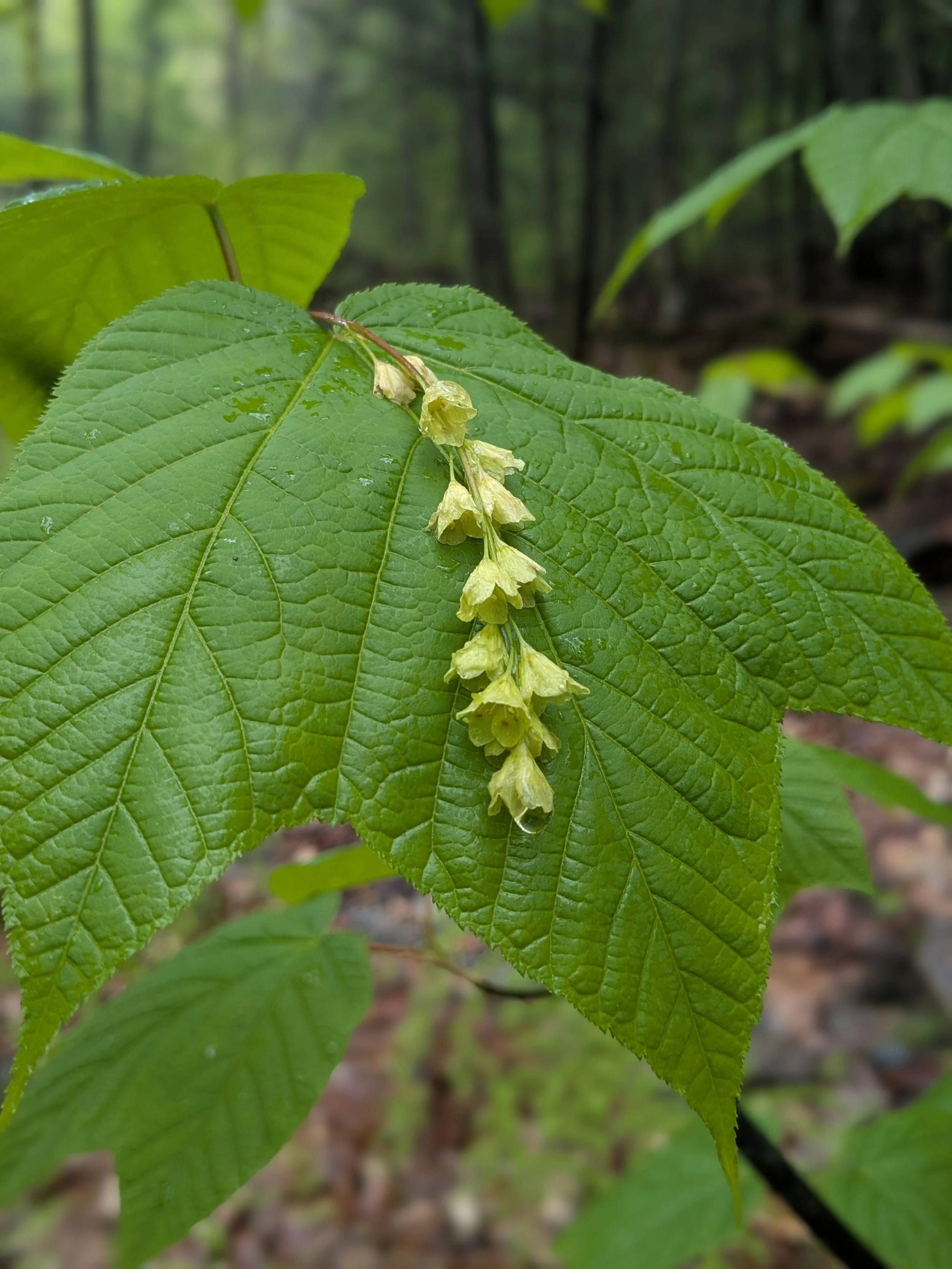
Striped maple in bloom.
CyberTracker Certifications
What am I doing in this forest and why is it so important that I identify the hole digger? I flew out to southern Vermont to take part in a two-day track and sign certification run by CyberTracker North America. Their website explains that “this intensive, highly educational process is globally recognized as an unparalleled tool for learning about local wildlife and landscapes while preserving and advancing tracking skill.” Depending on your score, you may receive a certificate at the end.
In this case, I participated in a Specialist Track and Sign Certification. As a very rigorous process, you must first score 100% on a Standard Certification in order to qualify. I accomplished this prerequisite in May 2024 and felt ready to give the Specialist a serious attempt. Earning the Specialist Certificate requires a perfect 100% and is therefore an ambitious undertaking. Most people need to take multiple Specialist Certifications before reaching the required score. I had previously participated in a Specialist Certification in the Twin Cities and scored a 96%.
While scoring 100% is strenuous, it’s not impossible; and there is a bit of leeway built in. Two evaluators pose 60 questions over the course of two days: the first three are warm-up questions and don't count, 50 are very complex questions, and seven are bonus questions, which are extremely complex. Getting a bonus question wrong doesn't count against you, and if you get three bonus questions right, they cancel out a wrong answer of the 50 base questions. Therefore, you can miss two very complex questions and still receive your certificate, provided you answer at least six extremely complex questions correctly.
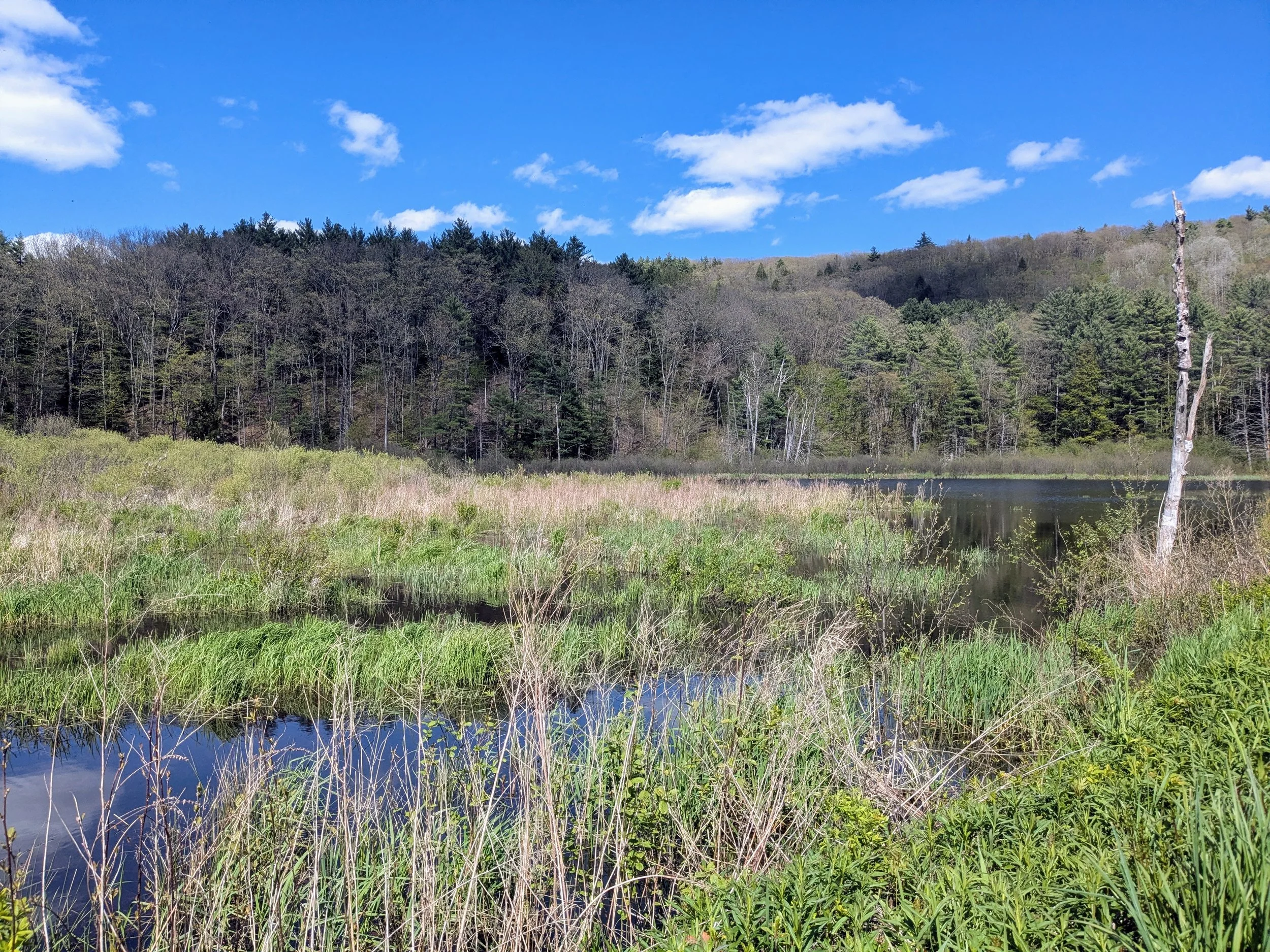
The beautiful spring landscape of southern Vermont.
The Benefits of Tracking
So why exactly would I hew time from my busy schedule to fly across the country and take part in a challenging process with no guarantee of actually receiving a certificate in the end? Am I crazy or something? Maybe a bit.
But in all seriousness, the CyberTracker Certification system is the international gold standard for tracking education. It was an absolute honor to participate in a Specialist Certification, and what I learned in just two days could fill dozens of pages. This kind of masterclass is absolutely necessary to preserve and advance the practice of tracking.
Tracking is a vital skill with important applications in wildlife research, outdoor education, conservation, hunting, and protecting rare species from poachers. Furthermore, tracking is a traditional art and science with significant cultural meaning for indigenous peoples around the world. Moreover, all of us have trackers in our ancestry–tracking was an essential practice for about 95% of humanity’s existence. Tracking is therefore quite literally in our blood.
I think that’s part of the reason it feels so good to track; humans are built to be trackers! We all engage with tracking in one form or another; we simply might not recognize it as such. For example, when you wake up in the morning and see that the ground is wet and leaves are dripping with water, you likely deduce that it rained overnight. That’s tracking! You didn’t see or hear it rain; you made observations and told a story that interpreted them.
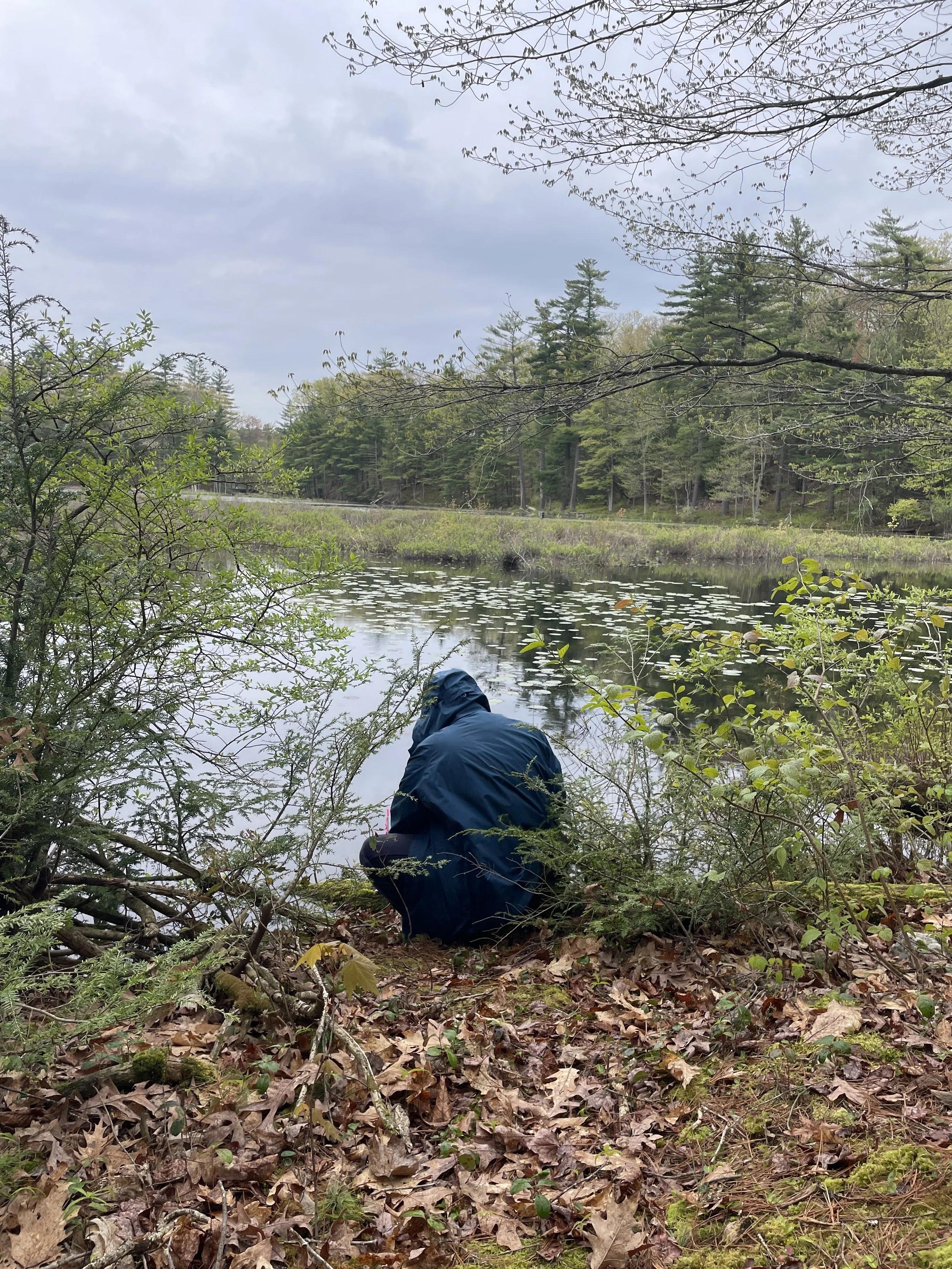
The author ponders a question at the edge of a pond. Photo courtesy of Ana Maria Arroyo.
Interpreting Stories
CyberTracker North America focuses on wildlife tracking, which it divides into two categories: track and sign and trailing. Track and sign primarily involves identifying who left marks on the landscape, while the aim of trailing is to follow an individual animal's tracks until you find them. In real-life tracking scenarios, you likely employ elements of both track and sign and trailing. But for the purposes of certifications, they are split in two to better assess skill levels and provide more focused learning.
Track and sign questions can cover anything found on the landscape, from paw prints to nests to scat to feeding and much, much more! Though the focus is on wildlife tracking, some questions might involve tracks or sign left by humans, domestic animals, or abiotic processes such as wind, flooding, or rain. It’s important to learn to distinguish these from similar-looking sign left by wild animals.
My favorite questions typically involve ones where I made a mistake or didn’t fully understand the associated behavior or ecological connections; these represent my biggest capacity to learn and grow as a tracker. One bonus question I missed on this certification was a small gray fox track; I wrote down red fox because I thought it was a kit. I simply did not realize gray fox feet could get so small and narrow! On the other hand, I correctly identified a bobcat track; then during the debrief external evaluator Casey McFarland informally asked whether we would call this a male or female. I wasn’t sure, but it turned out to be male. Casey explained that besides being larger, male bobcats’ toe pads and palm pads look inflated and rounded; female bobcats have more pointed toe pads and angular palm pads. This was not information I’d come across before, and I felt grateful that Casey went out of his way to explain it!
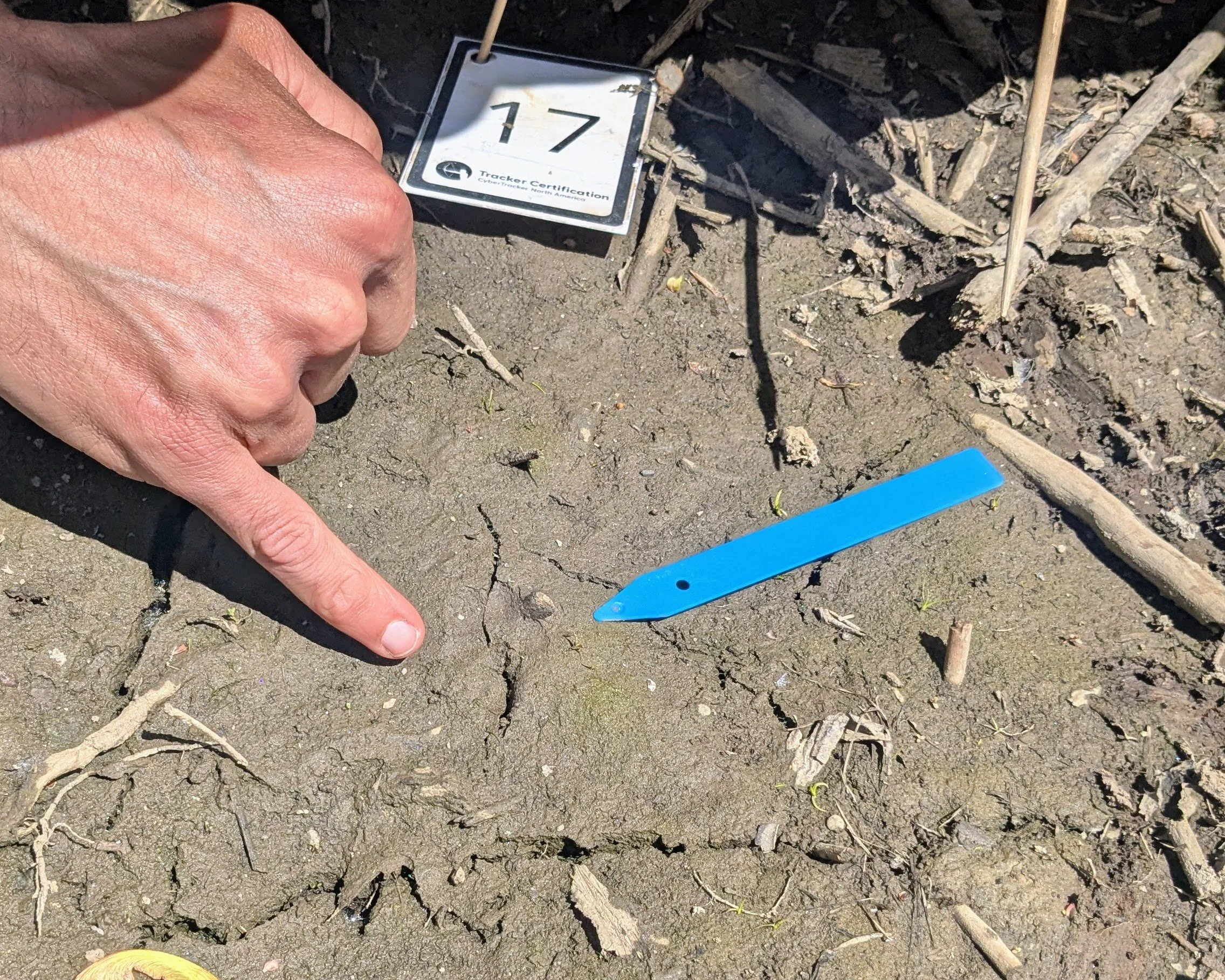
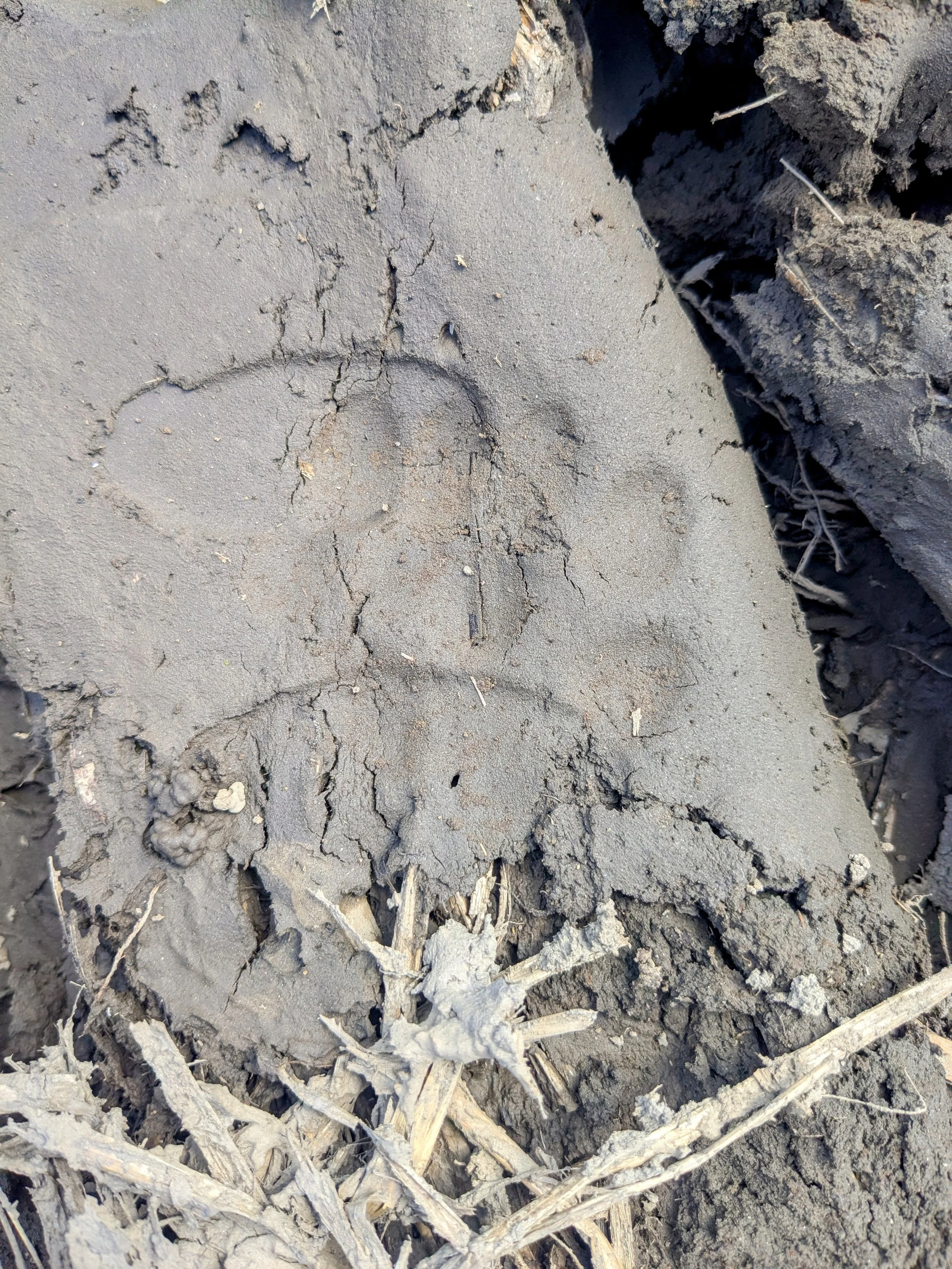
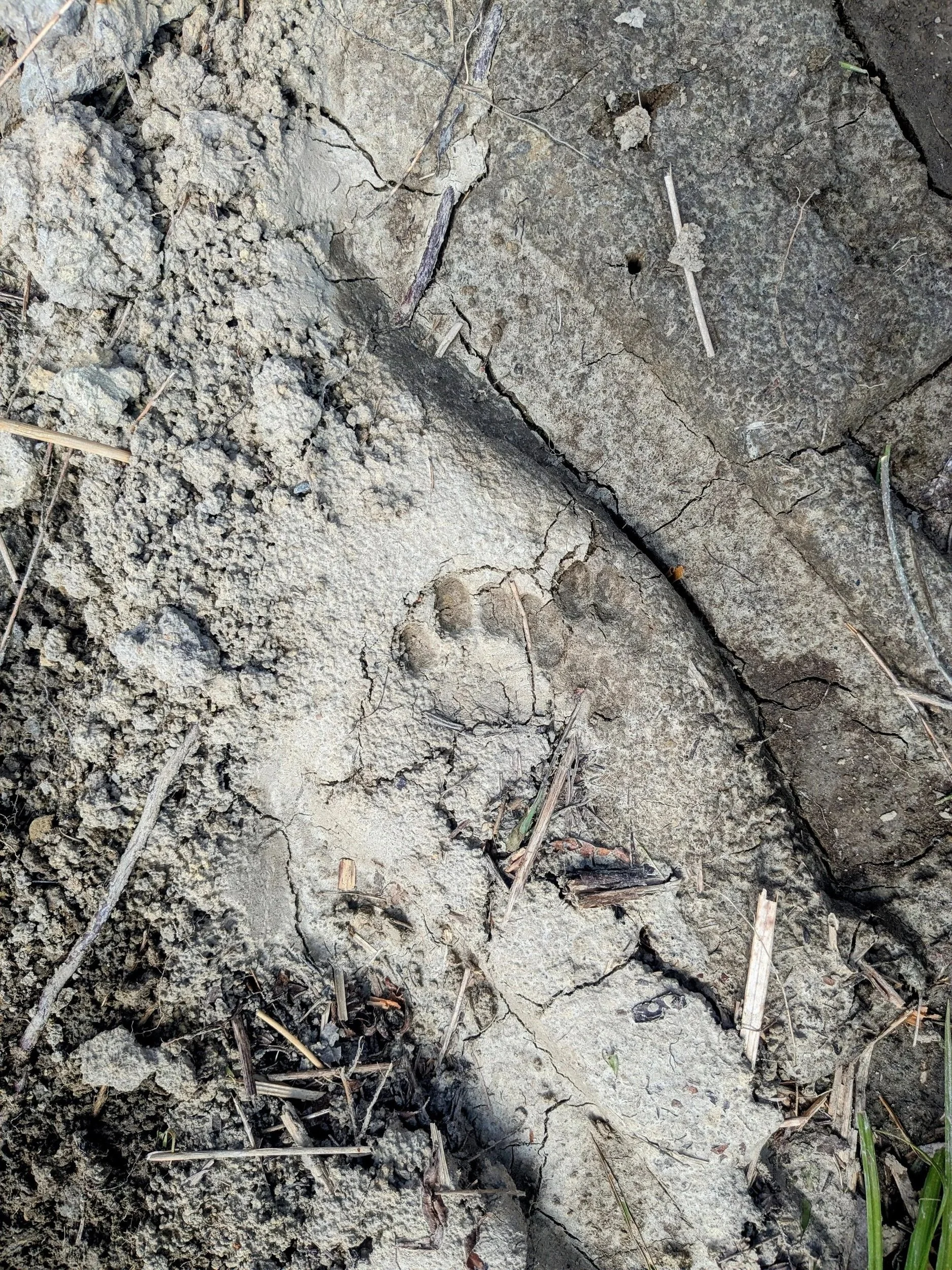
Another learning moment involved canid gaits, or how members of the dog family move across the landscape. The question asked who made the track and what gait they used–walk, trot, or gallop. I answered coyote and trot, which was correct. My method of distinguishing walks versus trots basically involves looking at the stride length–trots have longer strides than walks, and based on the size of the animal, you can deduct which gait they employed. However, the evaluators talked about a simpler method; if it’s a red fox, coyote, or wolf moving in a direct register pattern (where the hind foot lands exactly on top of the front), it’s always a trot. In their experience, they never see these canids walking in a direct register–always an overstep, where the hind foot lands beyond the front. Furthermore, the baseline gait of these animals is a trot, so if they’re moving in an overstep walk, it’s likely that they’re curious or investigating something.
Whose Digging?
The question that fascinated me the most was the one from the beginning of this article: a constellation of holes dug in the soil beneath a hemlock tree. I ended up writing down striped skunk but felt very uncertain. This was the very last round of questions; up until this point I had only missed bonus questions, so I was still on track to receive my certificate. However, I feared that this final round knocked me out and barely contained tears as I walked over to my fellow participants to voice my fears. Ana Maria, a young tracker from Vermont, told me that it’s okay and when this is all over we’ll write a song about how we’re great trackers who are not defined by a score. I laughed and felt my heart lighten a bit.
When the final person turned in their answers, it was time to debrief. I would finally find out if I achieved the Specialist Certificate or not! As it turned out, I was mistaken as to the identity of the hemlock digger. However, I still earned my certificate thanks to four correct bonus questions!
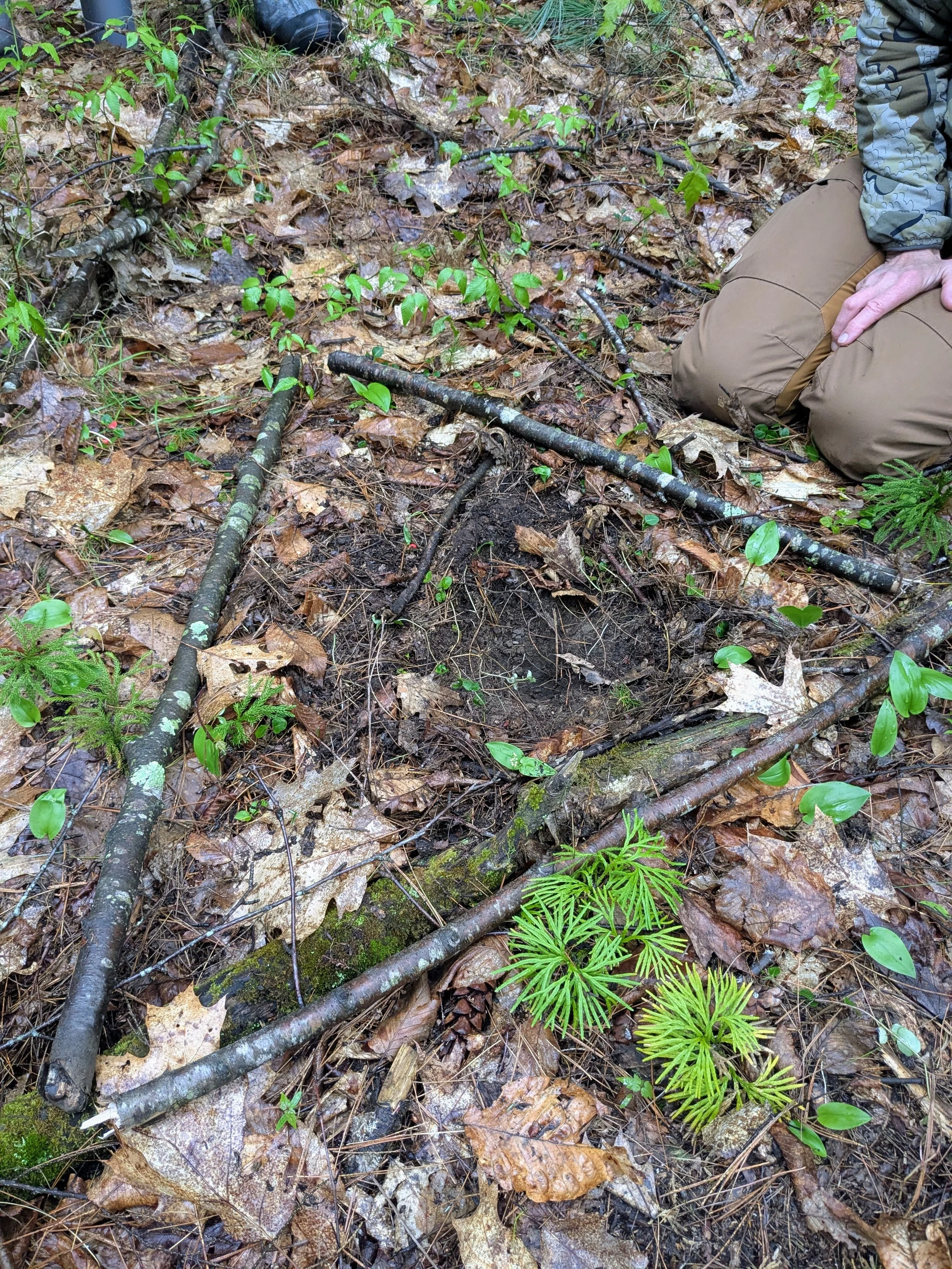
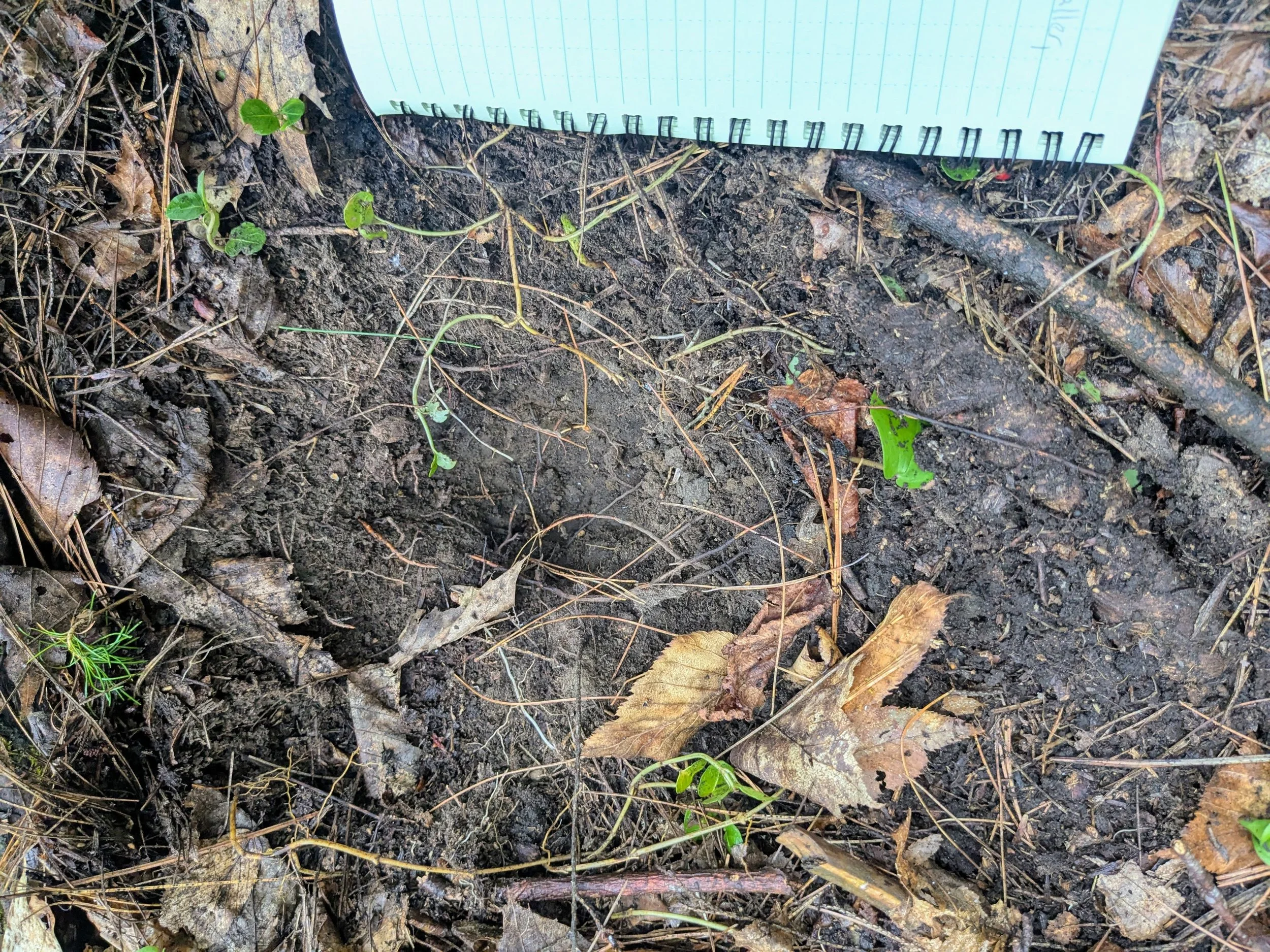
So who was the culprit after all? It was a porcupine digging for truffles! This was not a behavior I had previously associated with porcupines, and was surprised and delighted to find out that these large rodents love foraging these odiferous fungi, which grow in association with eastern hemlocks in spring and fall. Though hemlocks are endangered in the state of Minnesota, I look forward to finding analogous behaviors in our hardwood and pine forests.
The Big Picture
After the final debrief, the evaluators handed out Specialist Certificates to Rachel Pelham, Ana Maria Arroyo, and me. Even weeks later, the feelings of pride and accomplishment surrounding that official signed document bearing my name continue unabated. At the same time, I feel that Ana Maria spoke true when she said that as trackers, we are not defined by a number. First and foremost, we are shaped by the winds that swirl sand across freshly laid tracks, the flash of flicker feathers as they fly off from feeding grounds, the raucous chatter of red squirrels intent on protecting their larders.
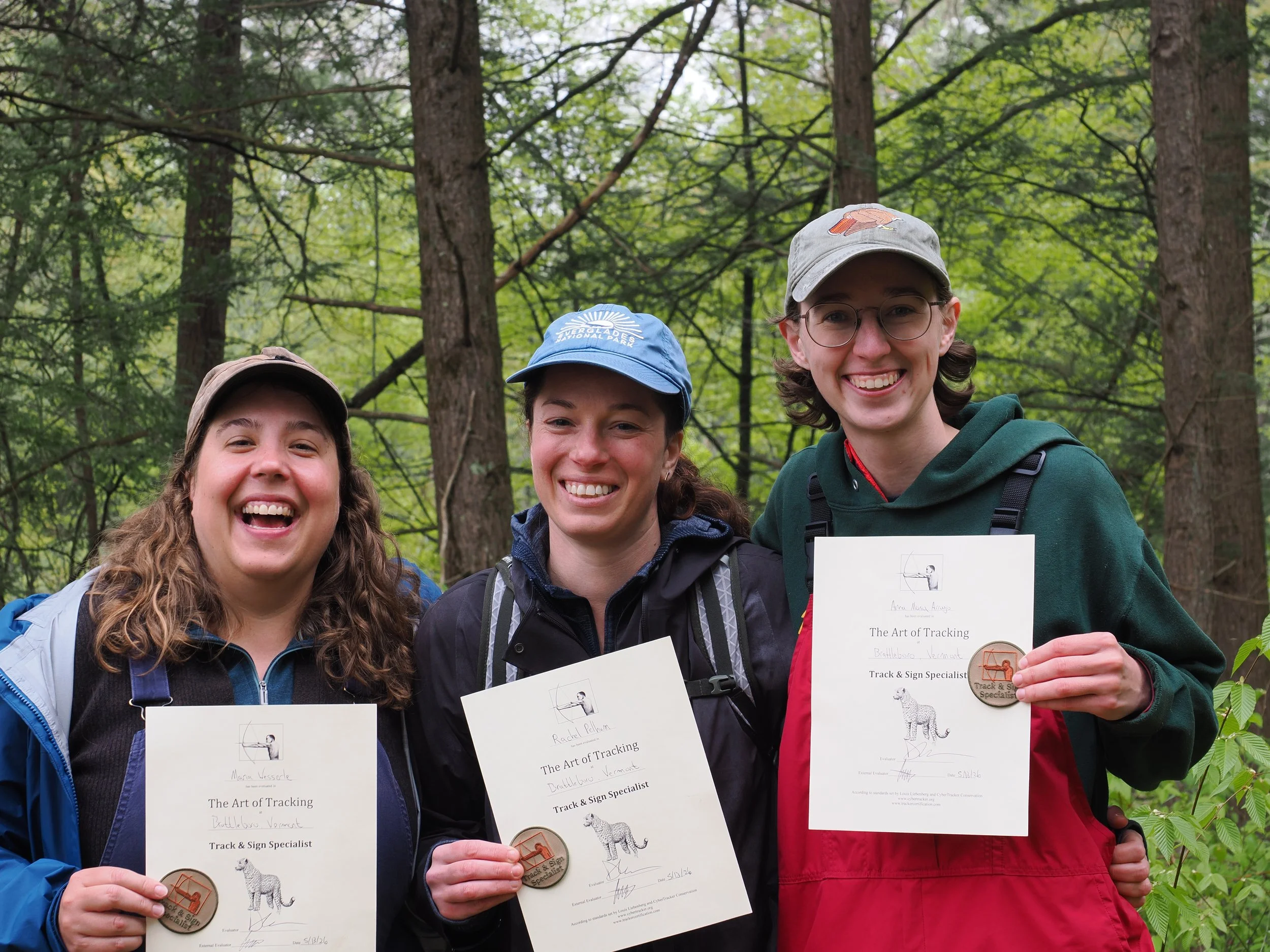
Three happy trackers! Left to right: Maria Wesserle, Rachel Pelham, and Ana Maria Arroyo showing off their new Specialist Certificates. Photo courtesy of Jonathan Poppele.
In the end, I feel the real treasure isn’t the certificate per se, but the entire experience building up to and surrounding the certification process. Gathering together in small bands to share stories, knowledge, and laughs is something that humans have done for as long as humans have existed. It’s an incredible way to immerse ourselves into the surrounding landscape and build relationships with other living beings. Gaining the ability to walk into a previously unexplored environment and read stories in the tracks of animals like one reads words on a page is a gift unto itself.
Gratitudes
Tracking is best learned in community; I consider myself very fortunate to have peers who are just as energetic and driven when it comes to tracking as I am. Special thanks to my friends and fellow nature nerds at the Minnesota Wildlife Tracking Project, in particular Jon Poppele, Kirsten Welge, Allison Van Dyk, Haleigh Ziebol, and Bill Kass. Heartfelt appreciation to the evaluators, assistants, and participants of the certification, who so generously and thoughtfully shared their knowledge and experience. I am indebted to the Tracker Certification North America Access Committee for their generous financial aid donations, as well as the Minnesota Naturalist Association for awarding me a minigrant for this educational opportunity. Finally, I must recognize the landscape itself, whose creatures, plants, fungi, soils, winds, and waterways continuously surprise and humble me. I would not be the tracker I am today without my teachers in the human and more-than-human communities, and to them I feel eternally grateful.
Join Us on Patreon!
If you like our foraging tutorials, please consider joining us on Patreon! It’s a simple way for you to help Four Season Foraging keep producing the informative content that you enjoy.
Big thanks to all the current members that make this work possible!
